Best time to visit: month-by-month weather and crowds
Dry season (May–October) is the most reliable time for sun and lower humidity, with June–August the busiest months and heaviest crowds. Shoulder months (April, May, September, October) offer a good balance of pleasant weather, fewer people and lower prices; the wet season (November–March) brings warmer, wetter conditions and reduced visibility for snorkeling.
In this guide
- Overview: season patterns and what to expect
- January–March: wet season and quieter resort
- April–May: shoulder season — good value and improving weather
- June–August: peak dry season and busiest time
- September–October: best months for weather and whales
- November–December: rain returns, quieter holidays
- Practical tips for timing your stay
Overview: season patterns and what to expect
Tahiti’s climate splits broadly into a drier austral winter (roughly May–October) and a wetter austral summer (roughly November–April). Temperatures stay warm year-round, with humidity and rainfall rising in the wet season.
Peak visitor numbers match the dry season—particularly June through August—so expect fuller restaurants, higher rates, and more booked activities. Shoulder months (April, May, September, October) generally have good weather with fewer crowds.
- Dry season: May–October — lower humidity, clearer skies
- Wet season: November–April — warmer, higher rainfall and humidity
- Shoulder months: April, May, September, October — good compromise on weather and crowds
| Season | Typical weather | Crowds |
|---|---|---|
| Dry (May–Oct) | Lower humidity, clearer skies | High (peak Jun–Aug) |
| Wet (Nov–Apr) | Warmer, more rain and humidity | Low–Moderate |
| Shoulder (Apr/May/Sept/Oct) | Mild, fewer storms | Lower than peak |
January–March: wet season and quieter resort
These are among the wettest months, with higher humidity and frequent showers that can reduce visibility for snorkeling in the Lagoonarium. Pool and beach time are still possible between brief heavy showers.
Crowds and rates are generally lower than in the dry season, so this period suits travelers who are flexible about weather and want quieter restaurants and activity availability.
- Weather: warm, humid, regular rain showers
- Crowds: lower; quieter resort experience
- Activities: spa, indoor dining, fitness center and on-site cultural evenings still available
| Month | Weather note | Crowd level |
|---|---|---|
| January | High rainfall and humidity | Low |
| February | Wettest month window for many years | Low |
| March | Rain continues but gradually lessens toward April | Low–Moderate |
April–May: shoulder season — good value and improving weather
April and May mark a transition toward drier weather: rainfall typically decreases, humidity eases, and sea conditions improve for snorkeling in the natural Lagoonarium. These months are often recommended for travelers seeking a balance between weather and value.
Crowds remain below peak levels, and advance reservations for dining at Le Lotus or popular activities are less urgent than in June–August. The resort’s spa and 24-hour fitness centre are good options during occasional rain.
- Weather: drying trend, milder humidity
- Crowds: below peak — easier dining and activity bookings
- Why visit: better prices than peak but reliably good weather
| Month | Best for |
|---|---|
| April | Lower rates; improving sea visibility |
| May | Stable dry weather begins; fewer crowds |
June–August: peak dry season and busiest time
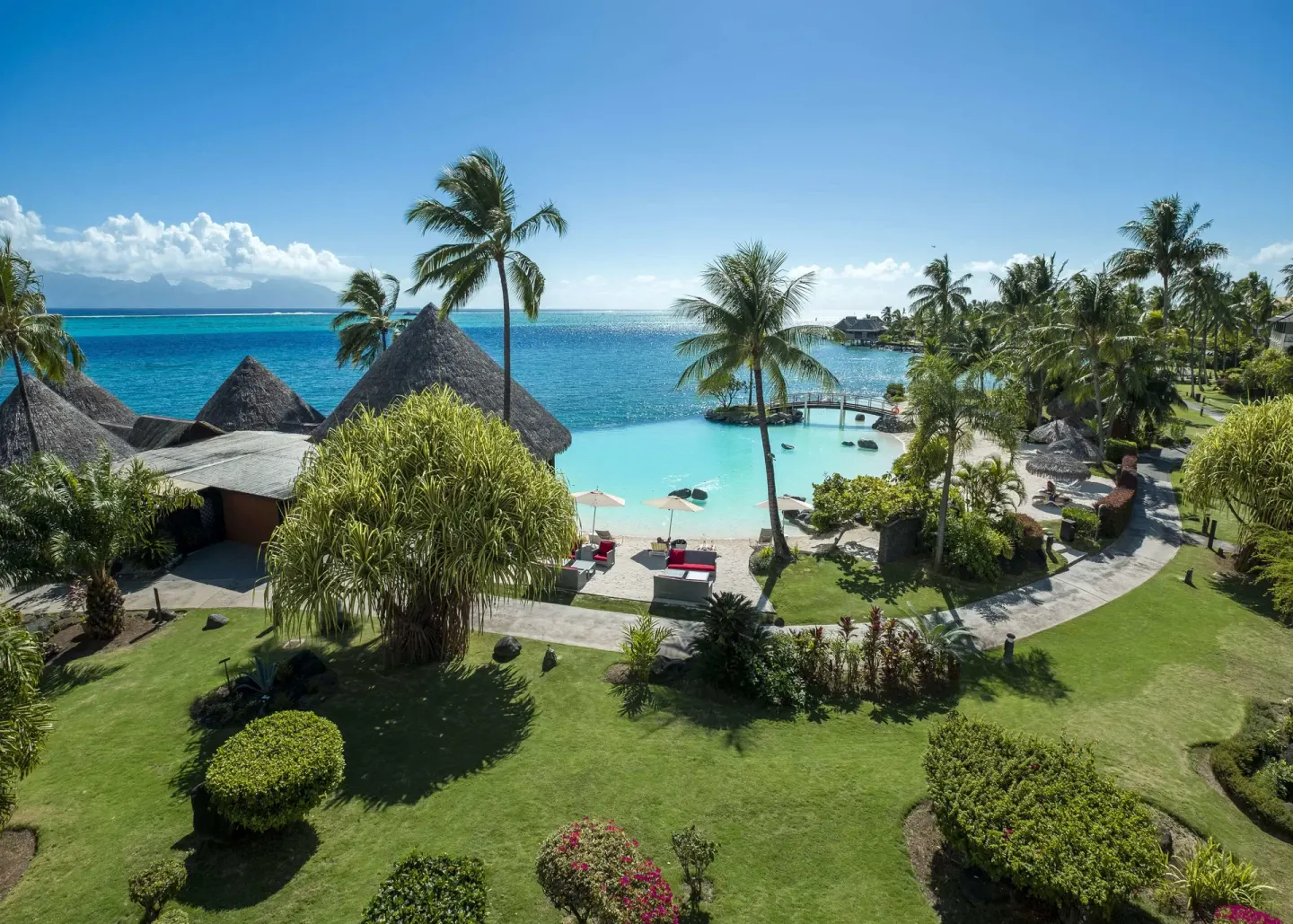
June through August are the driest months with the clearest skies and lowest humidity—ideal for lagoon activities, snorkeling, tennis, and day trips to Moorea. This is also the period with the largest number of visitors.
Expect higher occupancy and advance-booking needs for Le Lotus, Le Lotus Swim-Up Bar, themed nights at Te Tiare, and water activities from the dive and activities centre; rates typically peak as well.
- Weather: clear, dry, comfortable temperatures
- Crowds: highest — book Le Lotus and activities early
- Highlights: best conditions for Moorea day trips and on-water excursions
| Month | Notes |
|---|---|
| June | Start of peak season; dry conditions |
| July | High occupancy; coincides with French school holidays |
| August | Very busy; reserve restaurants and treatments early |
September–October: best months for weather and whales
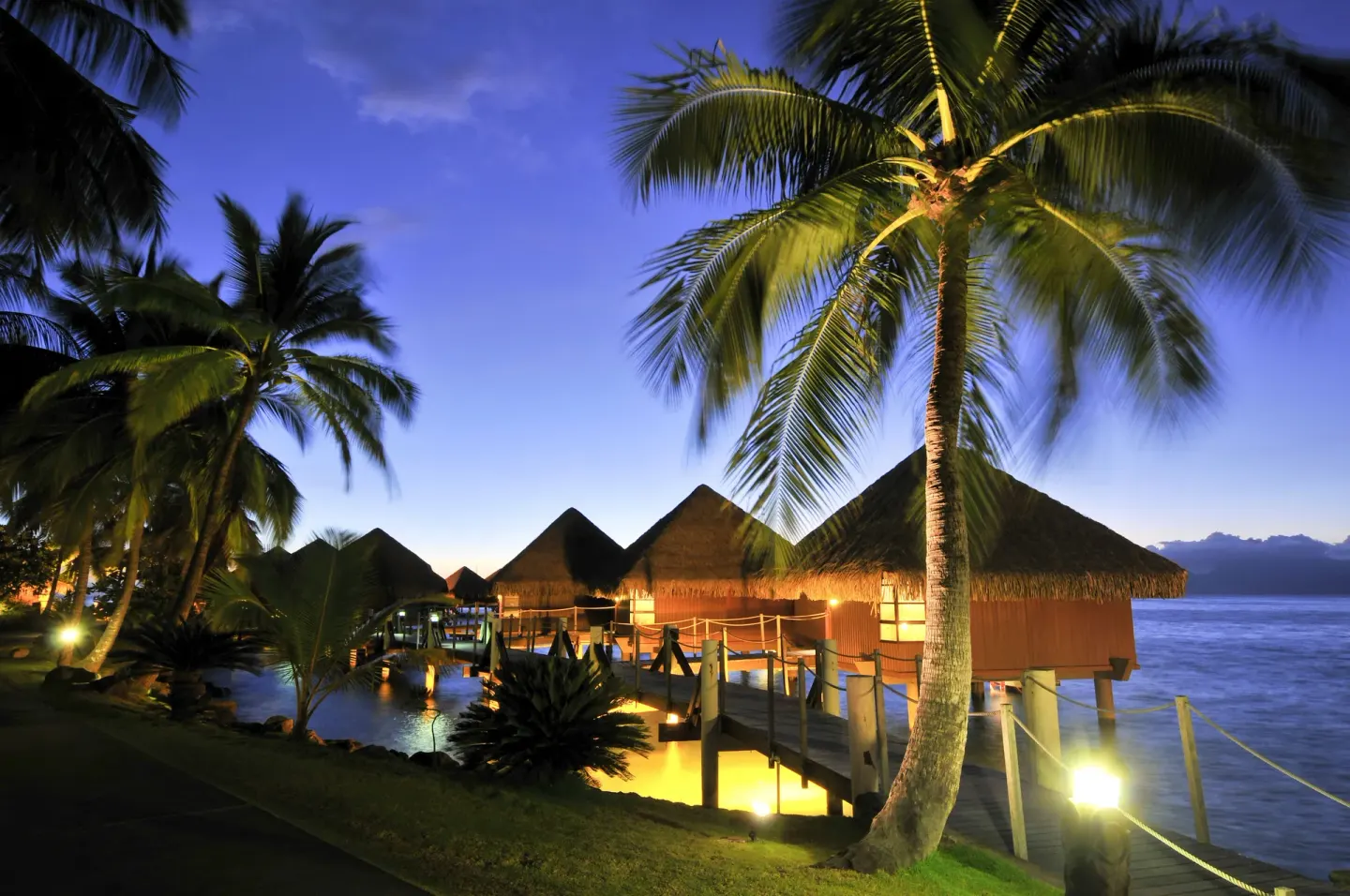
September and October are often cited as the best months to visit—combining low rainfall, mild temperatures, and fewer crowds than the June–August peak. Sea conditions are usually calm and clear for snorkeling in the lagoon.
Humpback whale season runs from mid-July to mid-November, with September frequently recommended for whale-watching excursions because of calmer seas and reliable dry weather. If whale watching matters, book an excursion early in your stay.
- Weather: excellent — low rain, pleasant temps
- Crowds: moderate — fewer than peak months
- Whale season: mid-July–mid-Nov; September is especially favorable
| Month | Why go |
|---|---|
| September | Top weather and whale-watching month |
| October | Warm, low-rain shoulder period with fewer crowds |
November–December: rain returns, quieter holidays
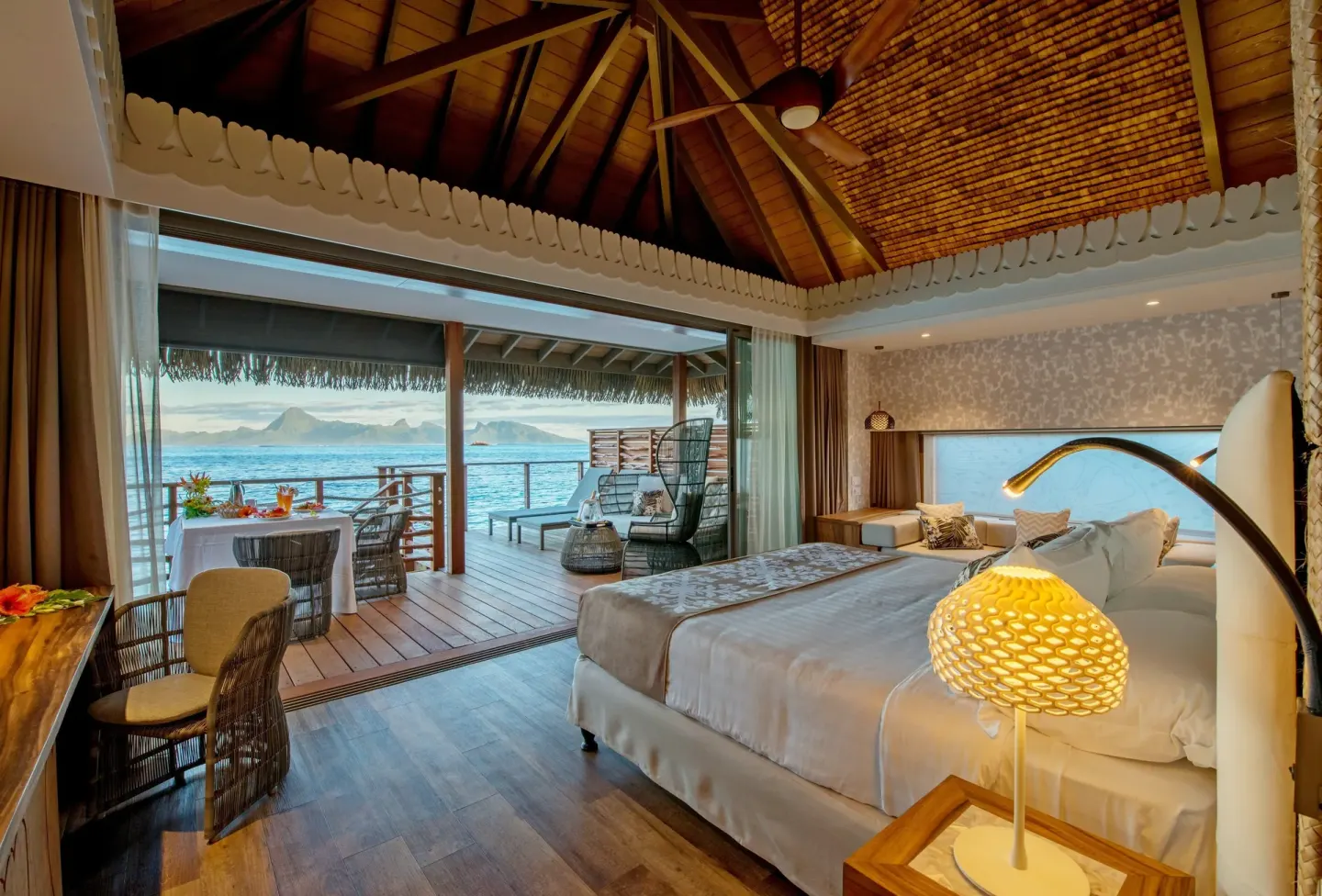
Rainfall increases again beginning in November and continues into December, with humidity rising and occasional heavier storms. Water visibility for snorkeling may be reduced after heavy rain.
Crowds are mixed: early November is quieter, while late-December around year-end holidays can attract more visitors despite wetter weather. If traveling over the holidays, reserve dining and spa treatments in advance.
- Weather: wetter and more humid starting November
- Crowds: low in early Nov, higher around late-December holidays
- Tip: plan indoor or spa activities on rainy days; book Le Lotus reservations if visiting over holidays
| Month | Typical crowd pattern |
|---|---|
| November | Lower early; rising by December |
| December | Quieter except for year-end holiday peak |
Practical tips for timing your stay
If you want the clearest lagoon water and most reliable weather, aim for May, September or October. For the most activities, restaurants and the liveliest atmosphere choose June–August but expect higher rates.
If you prefer lower prices and don’t mind occasional rain, visit during January–March. Regardless of month, book key items—Le Lotus reservations, spa treatments at Deep Nature Spa Tahiti, and any dive or excursion—with advance notice when possible.
- Book Le Lotus in advance during peak and shoulder seasons
- Reserve spa treatments (treatments >45 min include a 2-hour spa access pass)
- Plan whale-watching trips between mid-July and mid-November for best odds
| What to reserve early | Why |
|---|---|
| Le Lotus (overwater French dining) | Limited seating; busy at dinner |
| Deep Nature Spa Tahiti treatments | Popular times fill up, and longer treatments include spa access |
| Water excursions / Moorea day trips | Small-boat and ferry schedules and seat limits |